
how we help
ELLO Sessions helps organisations deliver compliance awareness to deskless, frontline and site-based employees who cannot realistically complete individual e-learning.
The workforce gap
E-learning does not fit every workforce
Individual e-learning works well where employees have reliable access to email, devices, internet connectivity and time to complete a course.
That is not the reality for every workforce.
Factory employees, drivers, warehouse teams, construction workers, farm workers and other operational employees may share devices, work across shifts or sites, have limited digital access, or rarely use work email.
Trying to force the same e-learning process across the whole organisation can create unnecessary friction, low completion and a gap in the organisation’s awareness record.
ELLO Sessions provides another route: short, facilitator-led compliance awareness delivered where employees already work.
The delivery route
Designed for how frontline teams work
1
Run sessions on site
Short videos can be delivered during toolbox talks, shift briefings, induction sessions or team meetings. Employees do not need individual email addresses, e-learning accounts or personal devices.
2
Easy to understand
Each session focuses on one topic and uses clear language and recognisable workplace situations to help employees identify a risk and understand the safer next step.
3
Keep a record of what happened
Attendance registers and facilitator attestations provide a record of the session and the employees recorded as attending.
The client can manage these records internally, or Compliance Online can consolidate submitted records into agreed reporting where that support is included.
frontline TEAM awareness
Sessions topics
Workplace Ethics
Everyday choices when the right thing is not always obvious
This session helps employees recognise practical ethics risks at work, including false records, gifts, favouritism, misuse of company resources and staying silent when something feels wrong.
It gives employees a simple standard: if something requires dishonesty, unfairness or harm, do not do it. If unsure, stop and ask. If something is wrong, report it.
Workplace Anti-Harassment
Recognising conduct that makes work unsafe or degrading
This session helps employees recognise harassment in ordinary workplace moments, including shouting, humiliation, bullying, sexual pressure, offensive messages, exclusion and retaliation.
It makes clear that harassment is not only physical or sexual. It can be verbal, psychological, digital, or linked to abuse of authority. If conduct makes someone feel unsafe, degraded, intimidated or afraid, it should be reported through the proper channel.
Workplace Diversity
Dignity and respect in everyday workplace conduct
This session helps employees understand that people should be judged by their work, not by race, language, culture, nationality, gender, age, disability, religion, background or appearance.
It focuses on everyday conduct that can exclude or demean people, including offensive jokes, WhatsApp messages, unwanted attention, name misuse and quiet exclusion from the team. Employees learn to recognise when conduct targets who someone is, why that matters, and when it should be reported.
Environmental Compliance
Spotting environmental risks before they spread
This session helps employees recognise environmental risk at work, including spills, leaks, dumping, contamination, waste handling and unsafe shortcuts.
It focuses on practical frontline moments where environmental harm can happen quickly and spread beyond the site. Employees learn a simple action standard: stop the source if it is safe, contain the harm, and report it immediately.
Anti-Bribery and Corruption
Recognising bribery risk in ordinary work situations
This session helps employees recognise bribery risk where it often hides, including supplier gifts, vouchers, personal favours, unofficial speed-up payments, customer tips, benefits for family members and false payment descriptions.
It makes clear that a bribe does not have to be cash, large or openly agreed. If a benefit is connected to something an employee can approve, speed up, overlook or influence at work, they should refuse, record the facts and report it.
Whistleblowing
Speaking up when something is wrong, dangerous or hidden
This session helps employees understand when and how to speak up about dishonest, unsafe, unfair or hidden conduct at work.
It focuses on moments employees may actually face, such as being asked to sign a false record, seeing a safety issue ignored, noticing unfair treatment, or realising that an incident is being downplayed. Employees learn that they do not need to prove it legally before reporting. They need to say what they saw honestly, through the proper channel.
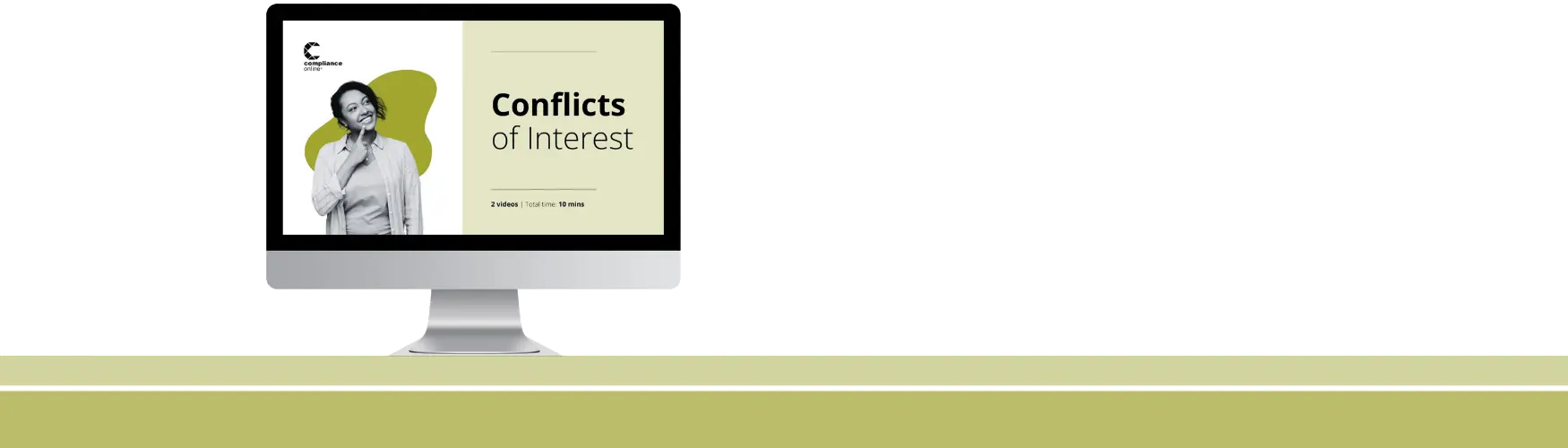
Conflicts of Interest
Knowing when personal interests may affect work decisions
This session helps employees recognise when personal interests, relationships, gifts or outside work could interfere with fair judgement.
It focuses on practical situations, including doing business with family or friends, accepting gifts, having a second job, using inside information, influencing supplier decisions or making choices where the employee or someone close to them could benefit. The simple standard is: if your personal interests could affect a work decision, declare it before you act.
How it works
A facilitator-led process

Choose the topic
Select the compliance topics relevant to the workforce, the organisation’s risk profile and the awareness record it needs.

Appoint a facilitator
The organisation nominates suitable supervisors, managers or other employees to deliver the Sessions on site.

Run the Session
The facilitator accesses the selected content and plays the short videos to the group.

Record attendance
The facilitator completes the required attendance register and attestation for the Session.

Manage the record
The organisation can keep the records internally. Where reporting is included, the submitted records are consolidated into the agreed report.
awareness routes
Choosing the right route for your workforce
ELLO Sessions may be suitable for organisations that need to reach employees who do not regularly work at computers or use conventional learning systems.
The best awareness route depends on how employees work, what level of evidence is needed, and whether e-learning is realistic for the people who need to complete it.
ELLO Sessions delivers facilitator-led group awareness on site, suited to deskless or low digital-access teams. In contrast, ELLO is individual e-learning with structured courses, personal access, and completion and assessment records, with Compliance Online managing enrolment, support, tracking and reporting.
Industry and workforce use cases
- Manufacturing and factory employees
- Mining and industrial site teams
- Construction workers and contractors
- Warehouse and distribution-centre employees
- Transport and logistics teams
- Farm and agri-processing workers
- Retail and hospitality employees
- Cleaning, security and outsourced operational teams
- Employees working across branches, shifts or remote locations
The detail
Got questions? Start here
What is the best way to deliver compliance training to deskless employees?
Where employees do not have regular access to computers, work email or individual devices, ordinary e-learning may not be realistic. A facilitator-led group session can provide a more practical route.
ELLO Sessions uses short compliance awareness videos that a supervisor or appointed facilitator can play during a shift briefing, toolbox talk or team meeting. Attendance and facilitator attestations can then be used to keep a record of the session.
Is ELLO Sessions available for frontline workers in South Africa?
Yes. ELLO Sessions is a South African compliance awareness route designed for frontline, operational, site-based and deskless employees.
It can be used by organisations with employees working in factories, warehouses, mines, farms, construction sites, logistics operations, retail environments and other workplaces where individual online training is difficult to manage.
Do employees need computers, email addresses or e-learning logins?
No. Employees do not need individual ELLO accounts, email addresses or e-learning logins.
The appointed facilitator accesses the selected video content and delivers it to the group. The organisation must provide a suitable screen or device, sound, and enough internet access to play the videos.
Does ELLO Sessions provide individual training certificates?
No. ELLO Sessions creates an attendance-attested awareness record for a facilitated group session. It does not create an individual e-learning completion certificate or individual assessment result.
Where an organisation needs personal course completion and assessment records, ELLO e-learning may be the more suitable route.
How are ELLO Sessions delivered?
Compliance Online provides access to the selected videos and supporting materials through a special Policy Passport licence. The client appoints one or more facilitators to run the sessions on site.
The facilitator plays the videos to the group, manages the session and completes the required facilitator attestation. Where reporting has been included, the attendance register and attestation records are submitted to Compliance Online for reporting.
How long does an ELLO Session take?
Each topic is made up of short videos of approximately three to five minutes, with a total running time of about ten minutes per course.
The full session may take slightly longer where the facilitator introduces the topic, pauses for discussion or explains the organisation’s internal reporting procedures.
What records are created after an ELLO Session?
The available records depend on the service scope.
The standard route allows the client to manage its own attendance registers and session records. Where the reporting service is included, the available evidence may include:
- the date and details of the session;
- an employee attendance register;
- the facilitator’s attestation; and
- reports produced from the records submitted.
These records help the organisation show what awareness was delivered, which employees were recorded as attending and what facilitator confirmation is available.
Can Compliance Online manage the attendance reporting?
Yes, where the reporting add-on has been included in the scope.
Facilitators submit their attendance registers and attestations using the required templates. Compliance Online then consolidates the submitted information into the agreed reports. Reporting depends on complete and accurate records being submitted on time.
Fill in your details below to receive a quote.